

Basketball can be regarded as a popular sport that is liked and played by millions of people all over the globe. Regardless of the game's location, whether a professional court or a school gym, the children stick and play according to the rules and regulations formulated to ensure the game's fairness. The rules governing the preparations of courts involve the height of the basketball goals, which is instrumental in the game's play. Now, let’s focus on the regulation height of basketball goals and its background, modern values, and effects.
The Historical Context of Basketball Goal Regulation Height
Basketball, invented in 1891 by Dr. James Naismith, has undergone several changes. However, there have been some standards that have always remained constant, one of them being the height of the basketball goal. Initially, the ball was thrown into a peach basket nailed to a track balcony 10 feet high. This height of the basket was, however, relatively established at one time because of the convenience of the setting in the gymnasium where the particular game was initially played. Over time, basketball developed as a more definite sport, and this height that was mentioned above became a standard.
It is clear that several factors determined the choice to keep the vegetative layer at the 10-foot height. Unfortunately, Dr. Naismith’s decision also introduced a balance to basketball for the involved players, which in this case, required talent and physical prowess.
The Current Standard for Basketball Goal Regulation Height
Today, the goal regulation is still 10 feet (305 centimeters) from the floor to the top of the hoop. This measurement can be done on different playing levels, from professional leagues such as the NBA to college and even high school basketball. The uniformity of this regulation height ensures that players can transition smoothly between different levels of play without adjusting to different goal heights.
Some organizations that define basketball goal regulation height include the NBA, FIBA, NCAA, and High School basketball. Such organizations have taken their time to analyze how goal height affects the game and have found that 10 feet is the most balanced to maintain fairness. These organizations have meticulously studied the impact of goal height on the game's dynamics and have concluded that 10 feet is optimal for maintaining competitive balance.
Impact of Basketball Goal Regulation Height on the Game
The height of the basket, which is 10 feet, affects most aspects of the basketball game, including player training and the tactics used.
Player Development
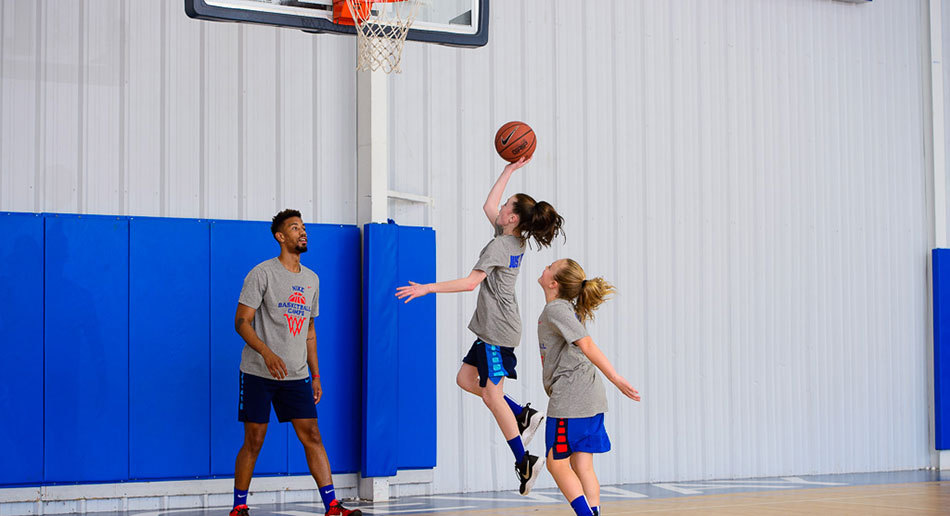
The height of the basketball goal regulation is very important in determining the manner and style through which players hone their skills. Players enter the sport on the lower hoops, which are between 6 and 8 feet high, as they are physically still at an early age. Thus, the goal height gradually increases as the players and their teams become more significant and better at reaching a standard 10-foot height. Such a progression assists individuals in their shooting form, passing and dribbling fakes, and increasing their self-confidence.
Game Strategy and Tactics
Every strategist involved in developing the strategies to be implemented on the field by the coaches and the players considers the height of the basketball goal regulation. The specific dimension of the basketball court added to enhance the effectiveness of the playing was the 10-foot rim; to score, one has to be very accurate in their shots. A thrilling aspect of the game, dunking is directly proportional to the hoop height for players who have leaped to get to the rim.
Defensively, the goal height influences shot attempts and the likelihood of shot blockers and boards. Since these players use their long arms to attack dunks, block shots, or even prevent opponents from reaching the baskets, they stand near them to grab the rebounds. This height also determines the style of play quantity and quality, especially about spreading the court, passing the ball, and positioning players for maximum efficient shots.
Variations in Basketball Goal Height for Different Age Groups
The regulation height for newly set basketball goals is 10 feet, depending on specific adjustments for young players who are still practicing and mastering the sport.
Youth Leagues
The goal height when playing the game in youth leagues depends on the age and talent of the youthful players. For instance, children between the ages of 5 and 7 may employ hoops set at 6 to 7 feet, while children aged 8 to 10 may be allowed to use hoops a little higher, about 8 feet from the ground. Owing to the above adjustments, young players can enjoy their performance and gain confidence in their endeavors, making them continue with the game and enhance perfection.
Middle School and High School
Goal sizes are raised when the players have moved to middle and high school, and it is common to have the goals at 10 feet high. This keeps them at par and ready to play the game in higher competitions while creating a channel to help them build on the needed skills to excel in the game.
The Role of Basketball Goal Regulation Height in Professional and International Play
Basketball goal regulation height has remained standard at 10 feet, particularly in professional basketball leagues such as the NBA and certified international basketball competitions under FIBA rules and regulations. This is especially important for fairness and adherence to the highest standards of a given line of work, such as sports.
NBA
The NBA's hoop size has remained 10 feet high and has invoked some of today's famous highlights. Basketball fans will never forget Michael Jordan’s slam dunks or Steph Curry’s three-point shots, and the goal height has also helped the players prove their skills to the world.
FIBA and International Competitions
The International Basketball Federation, FIBA, also observes a 10-foot goal height during its games. This standardization is good, especially for international events like the Olympics and the FIBA World Cup, whereby the competing teams are from different countries. The absence of varied goal heights allows players to adapt to similar environments, thus fighting for equal opportunity.
Technological Innovations and the Future of Basketball Goal Regulation Height
The hoop has been regulated at 10 feet for over a hundred years, but technology keeps on advancing the sport. Training equipment, analysis technologies, and a means to monitor the player’s performance are aiding within the new constraints of the goal height, invented daily.
Training and Performance Enhancement
Contemporary training practices involve using high technologies that can assist the players in enhancing their techniques. Some of the ways through which technology has helped in developing the players include the following; high-tech shooting machines, virtual reality training systems, data analysis of players’ performance, and so on. They provide athletes with the appropriate methods of the sport, help in improving the shooting efficiency and in the development of the necessary physical qualities for the nine-meter setting for goal.
Potential Changes and Adaptations
While no immediate plans exist to change the height of basketball goal regulation, the sport is constantly evolving. Discussions occasionally arise about whether the goal height should be adjusted to accommodate the increasing athleticism and skill of modern players. However, any such changes would require extensive consideration and consensus from the basketball community, as the current height is deeply ingrained in the sport's history and tradition.
Conclusion: The Enduring Significance of Basketball Goal Regulation Height
The 10-foot regulation goal height is a fundamental aspect of the sport, shaping how the game is played and enjoyed at all levels. From its historical origins to its impact on player development and game strategy, this standard height ensures that basketball remains a challenging and exciting sport. As technology and training methods evolve, the 10-foot goal height will likely remain a cornerstone of the game, preserving its rich history while embracing the future of basketball.